
Vestibular physiotherapy for dizziness, vertigo, and balance in Winnipeg
Dizziness and vertigo have a way of taking over. What starts as an unsettling sensation can quickly affect your confidence, your activity levels, and your ability to get through the day. At Strive Fitness and Therapy in Winnipeg, MB, our physiotherapists dig into the cause of your symptoms rather than guessing at the surface.
Your care starts with a thorough assessment and ends with a plan built specifically for you. Getting you back to feeling steady, clear-headed, and confident is the goal.
Who we help
Vestibular symptoms show up differently for everyone, and the patients who come to Strive reflect that range. We work with:
- People dealing with ongoing dizziness or vertigo who have been managing symptoms for weeks or months without improvement. If you have been told to wait and see but nothing has changed, a targeted vestibular assessment is the right next step.
- Patients recovering from a concussion who are still experiencing dizziness, motion sensitivity, or visual disturbances long after the initial injury. These symptoms are common in post-concussion recovery and respond well to the right physiotherapy approach.
- Active individuals and athletes who have noticed changes in their balance, coordination, or spatial awareness following an inner ear problem or injury, and want a structured plan to get back to full activity.
- Older adults worried about balance and falls who feel less stable than they used to, particularly in low-light settings or on uneven surfaces.
No matter what brought you through the door, your experience at Strive begins the same way: we take the time to listen, assess thoroughly, and put together a plan that fits your situation.

Conditions vestibular physiotherapy can help with
Patients often come in focused on one symptom and walk away with a much better understanding of what their body has been dealing with. Vestibular physiotherapy at Strive may help with:
- Vertigo and dizziness, including positional vertigo
- BPPV (benign paroxysmal positional vertigo)
- Vestibular neuritis and labyrinthitis
- Post-concussion dizziness and vestibular rehabilitation
- Balance disorders and fall prevention
- Motion sensitivity and visual motion sensitivity
- Cervicogenic dizziness originating from the neck
- Nausea and disorientation from inner ear dysfunction
- Unsteadiness and gait issues linked to vestibular impairment
- Return to sport and activity following a vestibular injury
It is worth noting that symptoms which seem unrelated, such as trouble focusing, fatigue in busy spaces, or difficulty with screen time, can all trace back to vestibular dysfunction. A proper assessment puts those pieces together.
What your first appointment looks like
New patients at Strive receive a full 90-minute one-on-one session with their physiotherapist. We do not use physiotherapy aids or assistants. The person who assesses you is the person who treats you, start to finish. No rushing, no handoffs.
Vestibular and balance evaluation
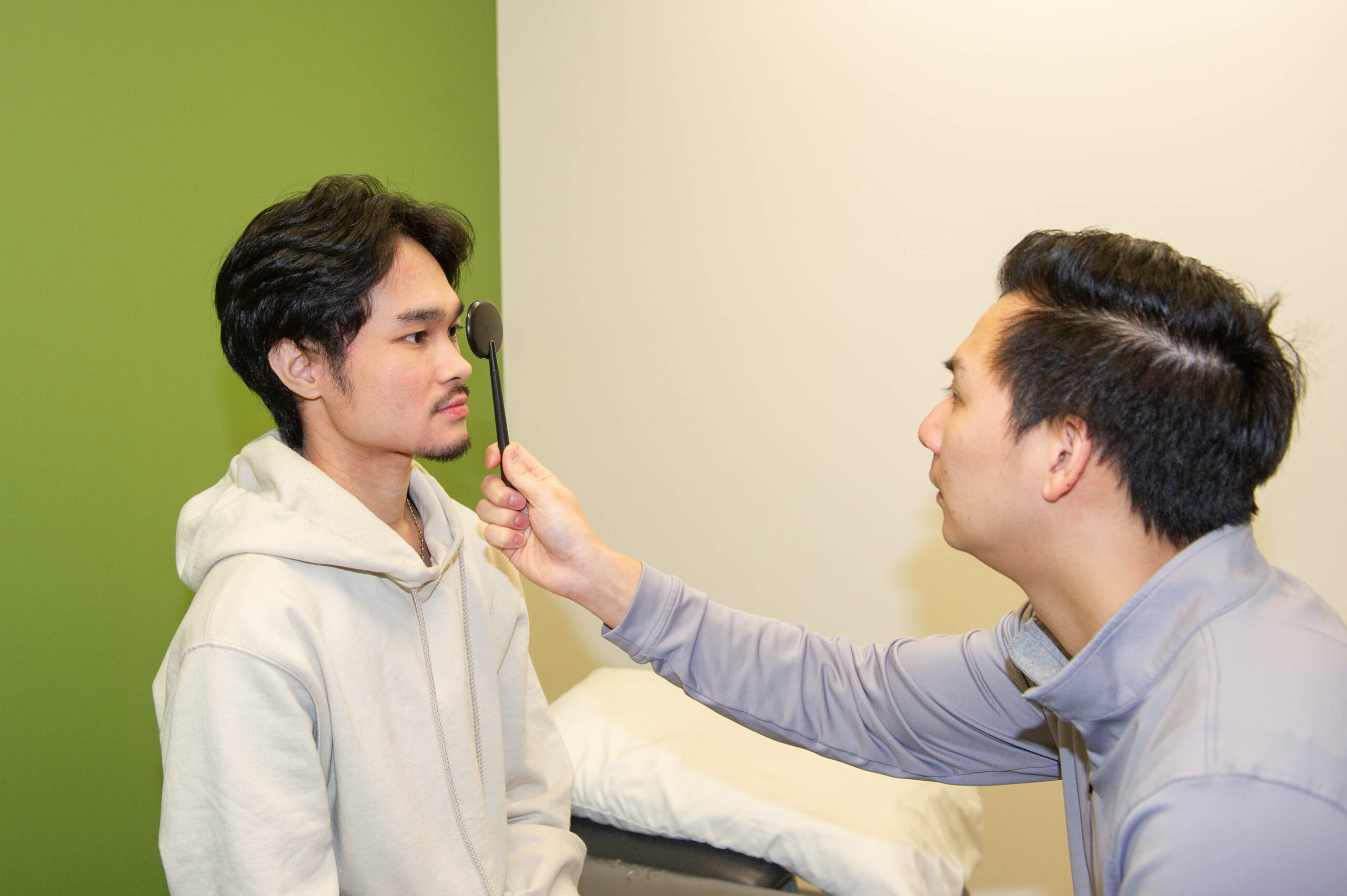
Your physiotherapist will work through a thorough evaluation of your vestibular system, including gaze stability, positional testing, inner ear function, and cervical involvement. This gives us the full picture of what is driving your symptoms and where to focus your care.
BPPV and inner ear screening
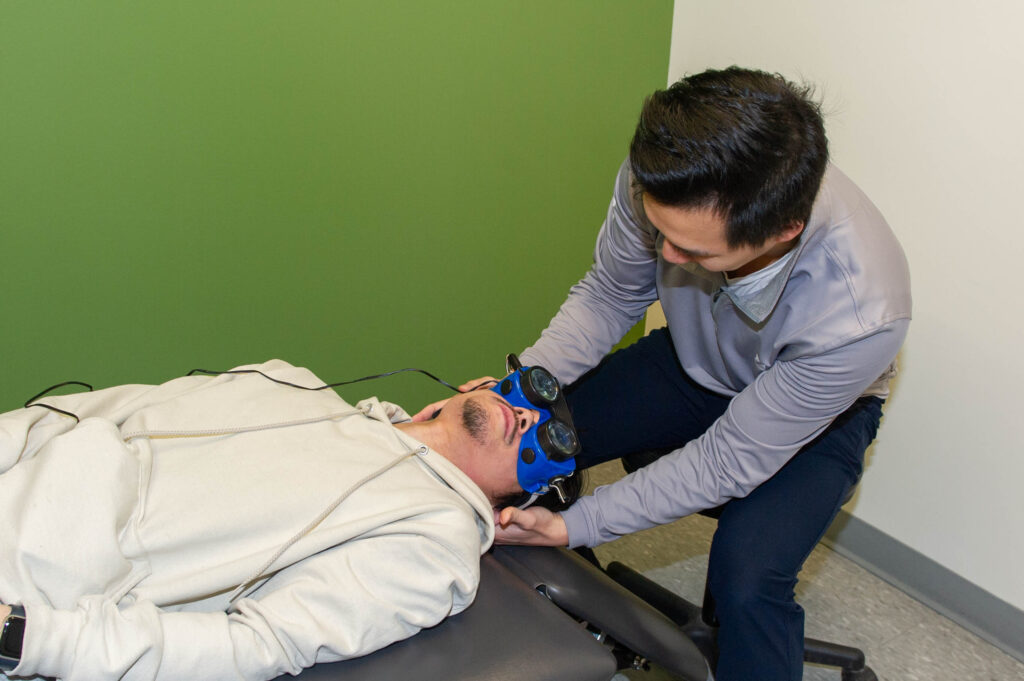
When BPPV is a possibility, your physiotherapist will use proven clinical tests to identify it and determine which canal is involved. Pinpointing this accurately is what makes treatment fast and effective.
Concussion and neck assessment when applicable
If your symptoms developed after a head injury or come alongside neck pain and stiffness, your assessment will include screening for post-concussion vestibular involvement and cervicogenic contributions. Both can drive dizziness, and both require a different treatment approach.
Understanding your day-to-day life
Test results alone do not tell the whole story. Your physiotherapist will take time to understand how your symptoms are affecting your work, your activity, and your goals. That context is what shapes a care plan that actually fits your life.
Your personalized vestibular care plan
Once your assessment is complete, your physiotherapist will walk you through a care plan built around your findings and your goals. You will know exactly what you are working on, why, and what progress should look like.
Depending on your needs, your plan may include:
- Canalith repositioning maneuvers for BPPV, including the Epley maneuver, carried out by your physiotherapist
- Gaze stabilization exercises to retrain the vestibulo-ocular reflex
- Balance and proprioception training to improve stability and reduce fall risk
- Habituation exercises to lower sensitivity to motion and visually busy environments
- Cervical manual therapy and mobility work where the neck is contributing to symptoms
- Progressive return-to-activity planning for athletes and active patients
- A home exercise program to keep your recovery moving between sessions
- Integration with other Strive services such as chiropractic or massage therapy where relevant
Nothing in your plan is arbitrary. Every piece is there for a reason, and the direction is always toward lasting improvement.
Why choose Strive?
1. We find the source, not just the symptom. Vestibular symptoms can come from several different places, and treating the wrong one wastes everyone’s time. We conduct a thorough assessment of your vestibular system, gaze stability, cervical function, and concussion history before any treatment begins, so your care is pointed in the right direction from session one.
2. Your plan is built around your life. After your assessment, you leave with a care plan tied to your specific findings and goals. Your schedule, your movement habits, and the way your services work together are all part of the picture. Nothing is pulled from a generic template.
3. Every minute is spent with your physiotherapist. New assessments are 90 minutes, and your entire time at Strive is spent one-on-one with your physiotherapist. No assistants, no handoffs. The person who knows your case is the person in the room with you.
4. Progress you can measure. We track your outcomes using the same assessment tools throughout your care. That means you can see where you started, how far you have come, and what is still ahead. Our team is invested in your long-term results, not just your next appointment.
Frequently asked questions about vestibular therapy in Winnipeg
What is vestibular therapy?
Vestibular therapy is a specialized branch of physiotherapy focused on conditions that affect the inner ear and the brain pathways that control balance and spatial orientation. Treatment combines hands-on techniques, specific exercises, and repositioning maneuvers to reduce dizziness and vertigo, improve balance, and help the vestibular system recalibrate.
How many sessions will I need?
It depends on what we find. BPPV often clears up in one to three sessions once the right repositioning technique is applied. Conditions like post-concussion vestibular dysfunction or chronic balance problems typically call for a longer, more progressive plan. Your physiotherapist will give you a realistic picture after your first appointment.
Do I need a referral?
No. You can book directly at Strive without a referral. Book online or call us at (204) 474-1320.
Is vestibular physiotherapy covered by insurance?
Most extended health benefit plans cover physiotherapy services, which includes vestibular therapy when delivered by a registered physiotherapist. We recommend confirming your coverage details with your provider. Receipts are available for submission purposes.
Can vestibular therapy treat BPPV?
Yes, and it does so very effectively. Your physiotherapist will use clinical testing to identify which canal is involved, then apply the appropriate repositioning maneuver to address it. A significant number of patients experience meaningful relief within one to three visits.
Can vestibular therapy support concussion recovery?
Yes. Vestibular dysfunction is one of the most common and longest-lasting effects of a concussion, and it is also one of the most responsive to physiotherapy. Our team assesses the vestibular, cervical, and neurological components of your presentation together, so your treatment targets the right contributing factors.
What is cervicogenic dizziness?
Cervicogenic dizziness is dizziness that comes from dysfunction in the upper cervical spine rather than the inner ear. It often presents alongside neck pain or stiffness and is commonly seen after whiplash injuries. A combination of vestibular physiotherapy and cervical manual therapy is typically very effective. Your physiotherapist will assess both systems as part of your initial evaluation.
I have had dizziness for a long time. Can vestibular therapy still help?
Yes. The vestibular system retains the ability to adapt and compensate with the right guidance, even after months or years of symptoms. Chronic dizziness and long-standing balance problems are absolutely worth assessing. If you feel like you have tried everything, a thorough vestibular evaluation may still uncover a clear path forward.
Your Next Steps…
Request An Appointment
Receive A Custom Treatment Plan
Work Hard and Progress In Your Recovery
Recover & Enjoy Life Pain-Free!