
What Is Vestibular Therapy and Who Can It Help?
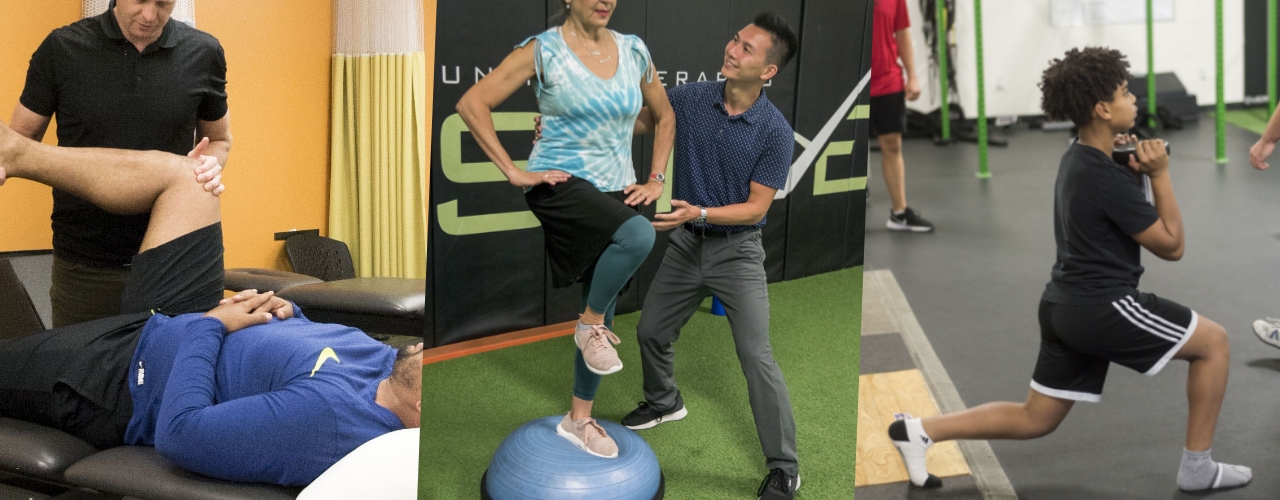
Feeling dizzy, unsteady, or like the room is spinning can be unsettling and frustrating. Many people are surprised to learn that these symptoms are often related to the inner ear and balance systems, and that targeted vestibular physiotherapy may help reduce them. At Strive Fitness & Therapy in Winnipeg, we offer vestibular therapy as part of our multidisciplinary approach, combining rehabilitation and performance training to support both everyday function and long-term health.
What Is Vestibular Therapy?
Vestibular therapy, sometimes called vestibular rehabilitation, is a type of physiotherapy that focuses on dizziness, vertigo, and balance problems. It uses specific exercises and movements to help your brain and inner ear work together more effectively. Because balance and mobility are so important for everyday life, we often integrate vestibular therapy with our broader physiotherapy treatment and fitness programs to support full-body recovery and long-term resilience.
At our clinic, vestibular physiotherapy may include:
- Gentle head and eye movement exercises
- Balance and gait (walking) training
- Habituation exercises to gradually reduce motion sensitivity
- Canal repositioning maneuvers for certain types of vertigo
- Education on pacing, safety, and returning to daily activities
How Your Vestibular System Affects Balance
Your vestibular system sits inside your inner ear and works with your vision and muscles to help you stay upright, steady, and oriented in space. When this system is not working well, you may feel dizzy, lightheaded, off-balance, or like the environment is spinning.
Targeted balance and movement training may meaningfully improve stability and reduce fall risk in adults, including older adults and people living with chronic conditions.1,2 In some situations, structured balance work has been shown to improve both static balance (standing still) and dynamic balance (moving around), and may even help people move with more confidence and control.1-3 These are key goals of vestibular and balance therapy.
Who Can Vestibular Therapy Help?
We commonly see vestibular and balance concerns across many age groups in Winnipeg—from busy professionals to older adults and youth athletes. Vestibular therapy may be helpful if you are experiencing:
- Dizziness or vertigo (a spinning sensation)
- Unsteadiness, especially on uneven ground or in the dark
- Frequent falls or near-falls
- Motion sensitivity (cars, busy environments, scrolling screens)
- Post-concussion dizziness or balance changes
- Inner ear conditions such as BPPV (benign paroxysmal positional vertigo)
Our vestibular physiotherapy approach is one-on-one and individualized. We tailor your plan based on your symptoms, activity level, and goals—whether that is simply walking around the block confidently, or returning to sport and higher-level training.
Vestibular Therapy for Dizziness and Vertigo
Many people search for dizziness treatment options after experiencing a sudden spinning episode or ongoing lightheadedness. In some cases, vertigo is caused by small crystals in the inner ear shifting into the wrong place (such as with BPPV). In other cases, dizziness is more persistent or related to head movement, busy environments, or neck and eye coordination. From there, we may use canal repositioning (for certain types of BPPV), targeted gaze stabilization exercises, and balance therapy. This inner ear rehabilitation approach may gradually retrain your system to respond better to movement and visual input.
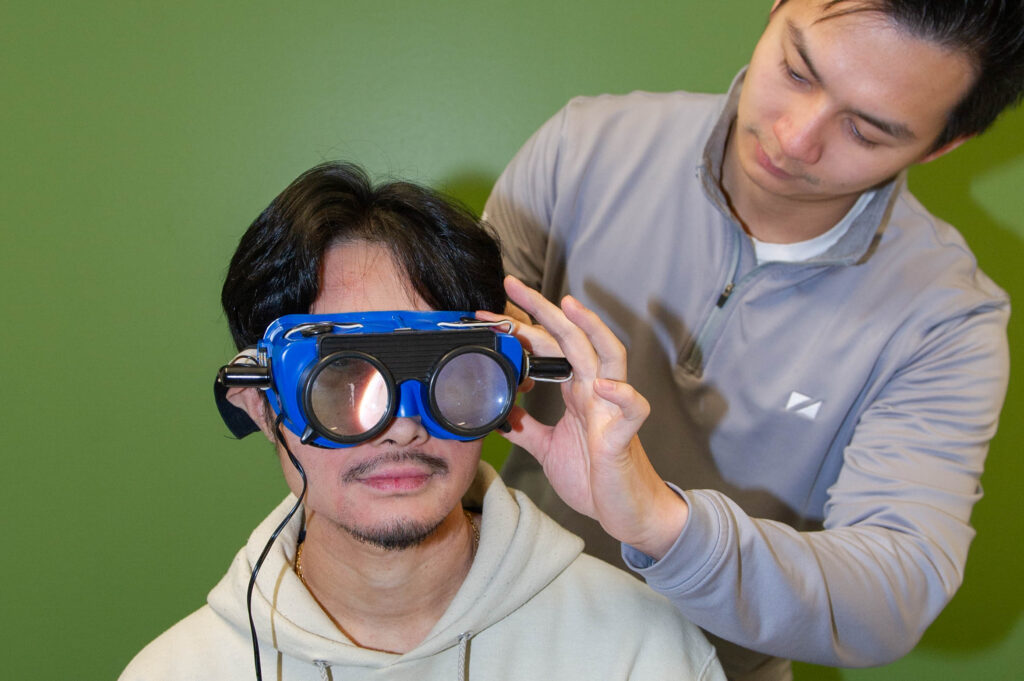
During a vestibular assessment at our clinic, we:
- Listen to your symptom history (what brings on dizziness, how long it lasts, and what it feels like)
- Assess eye movements, head movements, and balance
- Screen for neck, strength, and posture factors that may contribute
Balance Therapy for Falls, Confidence, and Performance
Balance therapy is not just for people who feel dizzy. It can also be valuable if you feel “wobbly,” have had a fall, or notice that you avoid certain activities because of fear of losing your balance.
Research in older adults indicates that balance training can improve static and dynamic balance and may lower fall risk, helping people move more safely and confidently in daily life.1 In people with chronic lung conditions such as COPD, adding balance training to regular exercise programs has been associated with better balance, improved balance confidence, and better health-related quality of life.2 For active individuals and athletes, combining balance and plyometric training has been shown to enhance dynamic balance and change-of-direction ability, which are key for sport performance.3
We integrate these principles into our vestibular and balance programs at Strive Fitness & Therapy. For example, you might start with basic standing and walking drills, then gradually progress to more challenging, sport-like movements as your symptoms improve and confidence grows.
How Vestibular Therapy Fits into Our Holistic Approach
At our clinic, vestibular physiotherapy is rarely done in isolation. We look at your whole picture—strength, mobility, flexibility, and conditioning—to help you return to the activities that matter most.
Depending on your needs, your vestibular care plan may be combined with:
- Physiotherapy to address neck stiffness, headaches, or post-concussion symptoms
- Manual therapy to ease joint and muscle tension that may be contributing to dizziness or balance issues
- Personal training or 1-on-1 personal training to rebuild strength, endurance, and confidence once your symptoms are more stable
- Large group training or sport-specific programming to bridge the gap from rehab back to full performance
This integrated model is especially helpful if you are also dealing with chronic pain, previous sports injuries, or are preparing for or recovering from surgery and want to maintain your balance and conditioning alongside pre-surgical physiotherapy or post-surgical rehabilitation.
What to Expect from Vestibular Physiotherapy at Strive
When you book vestibular therapy with us in Winnipeg, your care usually follows these steps:
- Initial vestibular assessment – We take a detailed history, perform balance and eye movement tests, and rule out red flags that may require medical follow-up.
- Personalized plan – Your physiotherapist designs a plan that fits your lifestyle, work, and activity level. This might include home exercises, in-clinic sessions, and gradual exposure to movements that currently trigger your symptoms.
- Progressive balance training – Over time, we may add more dynamic tasks, dual-task balance (such as moving and thinking at the same time), or sport-style drills if appropriate.2,3
- Transition to long-term health and performance – Many people choose to move into ongoing strength and conditioning, small group sessions, or sports-performance training in our gym space once their dizziness and balance are under better control.
You do not need a referral for physiotherapy at our clinic, so if you are searching for “no referral physiotherapy Winnipeg,” you can contact us directly to get started.
FAQ: Vestibular Therapy in Winnipeg
Do I need a doctor’s referral for vestibular physiotherapy?
No. At Strive Fitness & Therapy, you can book directly with our physiotherapy team for vestibular assessment and treatment. Some insurance plans may require a physician’s note for reimbursement, so it can be helpful to check your coverage.
How many sessions will I need?
This varies from person to person. Some BPPV-related vertigo improves quickly with a few targeted sessions, while longer-standing dizziness or balance disorders may require several weeks of consistent exercises and follow-up. Your physiotherapist will review expected timelines with you after your assessment.
Is vestibular therapy safe if I feel very unsteady?
Yes, vestibular and balance therapy is designed to be as safe as possible. Exercises are graded to your current level, and we may start with seated or supported positions before progressing to more challenging standing tasks. In older adults and people with chronic conditions, supervised balance training has been used safely and may reduce fall risk.1,2
Can vestibular therapy help my athletic performance?
For athletes and active individuals, working on balance and dynamic stability may support quicker changes of direction, better control when landing or cutting, and overall movement efficiency.3 We often combine vestibular and balance work with strength and conditioning to help you return to sport or recreational activity with more confidence.
What if my dizziness is related to other pain or injuries?
Many people with dizziness also have neck pain, headaches, chronic pain, or lingering issues from old injuries. Our multidisciplinary team can coordinate vestibular therapy with care for conditions such as chronic pain, work injuries, or hip pain relief so that you are not managing each problem in isolation.
Discover Vestibular Therapy at Strive
If you are dealing with dizziness, vertigo, or unexplained balance issues and are looking for vestibular therapy Winnipeg options, our team is ready to help you move with more ease and confidence. Book an Appointment to schedule your vestibular assessment.
References
- Mańko G, et al. Effectiveness of aquatic Tai Chi on balance indicators: a systematic review. Front Public Health. 2026. doi:10.3389/fpubh.2026.1774853
- Sepúlveda-Loyola W, et al. Effects of adding balance training to pulmonary rehabilitation in individuals with COPD: A systematic review and meta-analysis of randomized controlled trials. Respir Med. 2026. doi:10.1016/j.rmed.2026.108799
- Feng G, et al. The effects of combined balance and plyometric training on change-of-direction and dynamic balance: A meta-analysis. PLoS One. 2026. doi:10.1371/journal.pone.0346232