
Shockwave Therapy for Pain Relief: What to Expect

If heel pain greets you with your first steps each morning, or a nagging elbow is keeping you off the golf course, you know how frustrating ongoing pain can be. When rest, ice and stretching haven’t helped enough, shockwave therapy may be another option to consider.
At Strive Fitness and Therapy in Winnipeg, shockwave therapy is used as part of a personalized treatment plan to help reduce pain, support healing and get you back to the activities you enjoy.

How Does Shockwave Therapy Work?
Shockwave therapy uses acoustic waves to stimulate the tissues in the painful area. For long-term tendon problems, this stimulation may help encourage the body’s natural healing process.
Research suggests shockwave therapy may:
- Improve blood flow to the treated area
- Support tissue repair and collagen production
- Help manage pain
- Break down calcium deposits in some tendons
The goal isn’t simply to mask your pain. Instead, shockwave therapy is designed to support your body’s natural healing process and help you move and function more comfortably.
What Can Shockwave Therapy Treat?
Shockwave therapy is commonly used for long-lasting tendon and soft tissue problems, particularly when other treatments haven’t provided enough relief.
At Strive, shockwave therapy may be used for:
- Plantar fasciitis and heel pain
- Tennis elbow
- Calcific tendinitis and some types of shoulder pain
- Patellar tendinopathy, also known as jumper’s knee
- Achilles tendinopathy
- Other tendon pain around where the tendon attaches to the bone
Research on shockwave therapy is encouraging. A 2024 meta-analysis found that both focused and radial shockwave therapy can reduce pain in people with plantar fasciitis and are generally well tolerated [1]. Research also suggests shockwave therapy may be most helpful when combined with exercise [2]. That’s why your treatment at Strive may include shockwave therapy alongside physiotherapy and progressive strengthening exercises.
What Happens During Shockwave Therapy?
Your first appointment begins with a one-on-one assessment with an experienced practitioner. This helps determine whether shockwave therapy is appropriate for your condition.
During treatment, your practitioner will:
- Locate the painful area by gently examining the tissue.
- Apply gel to the skin.
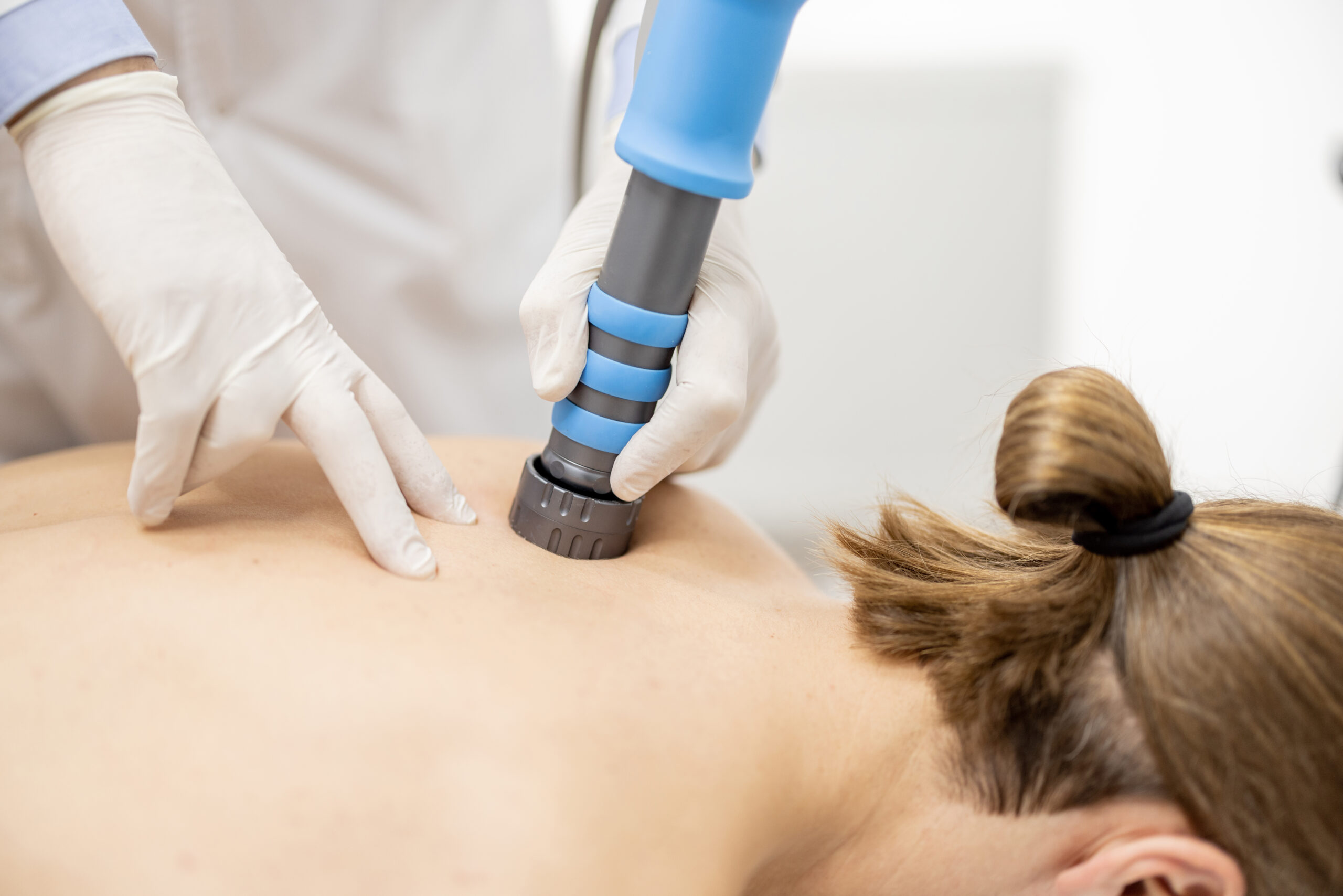
- Move a handheld applicator over the treatment area.
- Adjust the intensity based on your comfort level.
You may feel a rapid tapping or pulsing sensation during treatment. It can feel uncomfortable, but it shouldn’t be unbearable. Your practitioner can adjust the intensity throughout your session.
What Is Recovery Like?
One of the benefits of shockwave therapy is that there’s generally very little downtime. Most people can return to their usual daily activities the same day. You may experience some temporary:
- Tenderness
- Redness
- Sensitivity in the treated area
Improvement often happens gradually over several weeks rather than immediately after treatment. Following your exercise plan can also help support your recovery and long-term results.
Shockwave Therapy FAQs
Does shockwave therapy hurt?
Most people describe the sensation as intense tapping or pulsing rather than sharp pain. Your practitioner can adjust the intensity throughout the treatment to help keep you comfortable.
How many shockwave therapy sessions will I need?
It depends on your condition, how long you’ve been experiencing symptoms and how you respond to treatment. Your practitioner will recommend a treatment plan after your assessment.
Is shockwave therapy effective for plantar fasciitis?
Plantar fasciitis is one of the most researched uses for shockwave therapy. Research suggests it can help reduce heel pain [1].
Everyone responds differently, which is why shockwave therapy may be combined with other strategies such as stretching, strengthening and footwear recommendations.
Can I keep training while having shockwave therapy?
In many cases, yes. You may just need to make some temporary adjustments to your training.
At Strive, the physiotherapy team can work with your coaches to modify your program while you recover. This can be particularly helpful if you’re dealing with a sports injury.
Do I need a doctor’s referral for shockwave therapy in Winnipeg?
No. Manitobans can see a physiotherapist without a doctor’s referral through direct access. However, some insurance plans require a referral for reimbursement, so it’s a good idea to check your coverage before booking.
Could Shockwave Therapy Be Right for You?
If ongoing heel, elbow, shoulder or tendon pain is getting in the way of the activities you enjoy, shockwave therapy may be worth discussing with a physiotherapist. At Strive Fitness and Therapy, shockwave therapy can be combined with physiotherapy and exercise to help you work toward less pain, better movement and a return to the activities you enjoy.
Ready to Get Back to What You Love?
You don’t have to keep working around pain. Book an assessment with the team at Strive Fitness and Therapy to find out whether shockwave therapy could be a good fit for your recovery plan.
Request an appointment with Strive Fitness and Therapy today
References
- Lippi L, et al. Efficacy and tolerability of extracorporeal shock wave therapy in patients with plantar fasciopathy: a systematic review with meta-analysis and meta-regression. European Journal of Physical and Rehabilitation Medicine. 2024. https://pmc.ncbi.nlm.nih.gov/articles/PMC11561739/
- Burton I. Combined extracorporeal shockwave therapy and exercise for the treatment of tendinopathy: A narrative review. Sports Medicine and Health Science. 2022. https://www.sciencedirect.com/science/article/pii/S2666337621000706